

70 Brand and Website Terms You Should Know
If you’ve ever felt overwhelmed in conversations about branding or website design, especially when it comes to understanding brand and website terms, you’re not alone, and you’re not behind.
The truth is, the branding and website industry has its own language. From terms like brand strategy and client archetype to SEO, user experience, and conversion rate, it can quickly feel like you’re trying to understand a completely different world.
And yet these are the exact terms that show up in proposals, discovery calls, and the decisions that shape your business.
This guide is designed to change that.
Inside, you’ll find 70 brand and website terms explained in a clear, practical way so you can feel more confident in your investments, more equipped in conversations, and more in control of how your brand is built.
Because at the end of the day, this isn’t about memorizing definitions.
It’s about understanding how your brand works, and making decisions that actually move your business forward.
🎧 Listen to this episode on Spotify or Apple Podcasts or play it directly below.
Let’s Break Down the 70 Brand & Website Terms You’ll Actually Use
Brand Strategy & Positioning
1. Brand Strategy
The foundation of your brand that defines your goals, audience, messaging, and positioning. It’s what ensures your brand isn’t just visually appealing, but intentionally designed to attract and convert the right clients.
2. Brand Positioning
How your brand is perceived in the market compared to competitors. It determines where you “sit” in your industry and why someone would choose you over someone else.
3. Target Audience
The specific group of people your brand is designed to attract. This includes demographics, behaviors, and emotional drivers, not just surface-level traits.
4. Ideal Client
A more refined version of your target audience, representing the exact type of person you want to book. This helps guide your messaging, offers, and brand direction.
5. Niche
A focused segment of your industry that you specialize in. Choosing a niche helps your brand stand out and become known for something specific.
6. Brand Messaging
The language and communication style your brand uses to connect with your audience. It includes what you say, how you say it, and the emotions behind it.
7. Value Proposition
A clear statement of what you offer, who it’s for, and why it matters. This is often one of the first things people understand about your brand.
8. Brand Voice
The personality and tone your brand uses when communicating. Whether it’s warm, editorial, playful, or refined, consistency is key.
9. Brand Story
The narrative behind your business that builds emotional connection. It helps your audience understand your journey, values, and purpose.
10. Client Experience
The full journey someone has when interacting with your brand, from discovery to booking to delivery. A strong brand ensures this feels seamless and intentional.
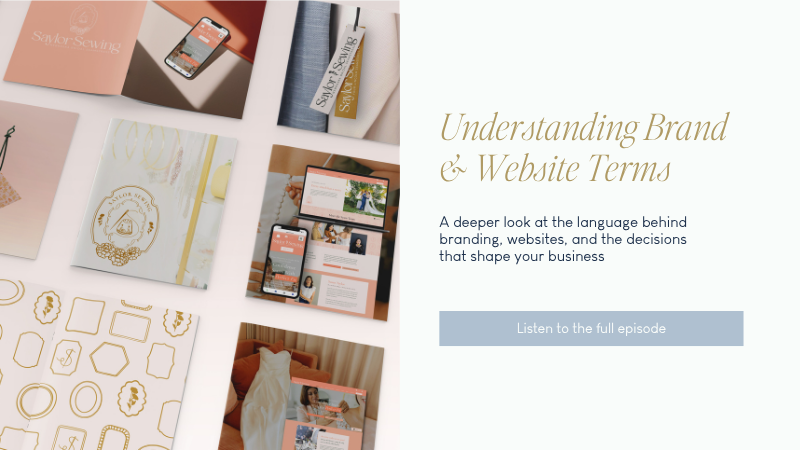
Visual Branding
11. Brand Identity
The visual representation of your brand, including logos, colors, fonts, and overall aesthetic. It brings your strategy to life visually.
12. Logo Suite
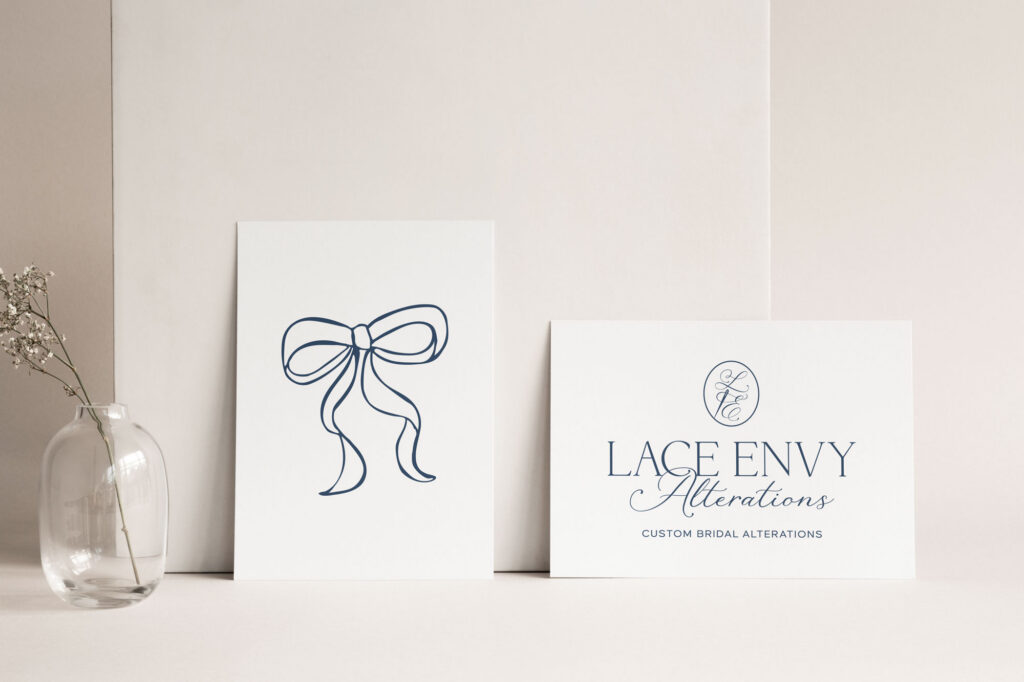
A collection of logo variations (primary, secondary, submark) that ensure flexibility across different platforms and uses.
13. Color Palette
A curated set of colors that represent your brand and are used consistently across all materials.
14. Typography
The fonts selected for your brand. These play a major role in how your brand feels—elevated, modern, playful, etc.
15. Submark
A simplified version of your logo used in smaller spaces like social media icons or watermarks.
16. Brand Patterns
Custom or curated patterns used to enhance your visual identity and add depth to your brand.
17. Brand Icons
Small graphic elements that support your branding and can be used across your website or marketing materials.
18. Mood Board
A visual collection of inspiration that defines the look and feel of your brand before design begins.
19. Visual Direction
The overall aesthetic vision for your brand, guiding design choices and ensuring consistency.
20. Brand Guidelines
A document outlining how to use your brand elements correctly, ensuring consistency across all platforms.
Website Basics
21. Website Design
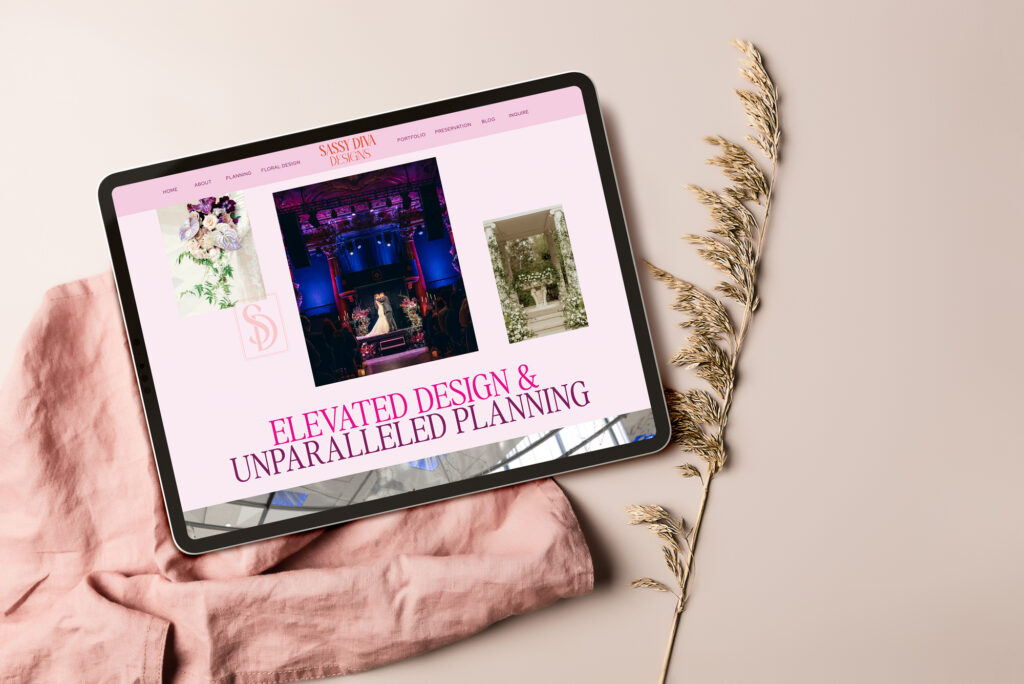
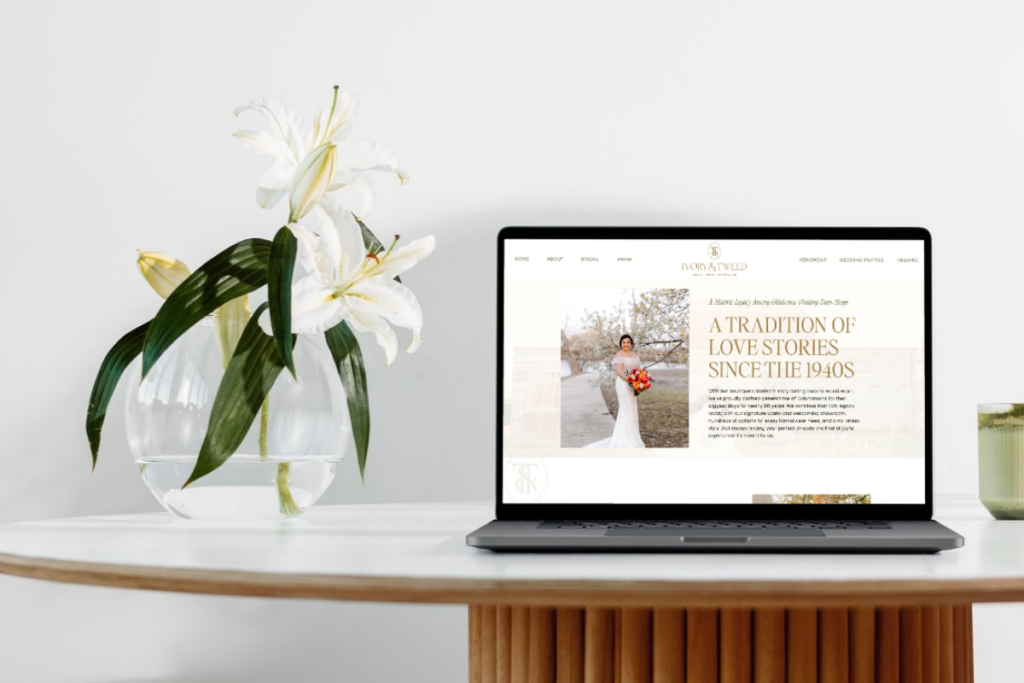
The process of creating the layout, visuals, and structure of your website to ensure it’s both functional and aligned with your brand.
22. User Experience (UX)
How easy and intuitive your website is to navigate. Good UX ensures visitors can quickly find what they need.
23. User Interface (UI)
The visual elements users interact with on your website, including buttons, menus, and layouts.
24. Navigation
The structure of your website that helps users move between pages easily.
25. Homepage
The main page of your website that introduces your brand and guides visitors to key areas.
26. Landing Page
A focused page designed for a specific goal, such as capturing leads or promoting an offer.
27. Call to Action (CTA)
A prompt that encourages users to take a specific action, like “Inquire Now” or “Book a Call.”
28. Conversion Rate
The percentage of visitors who take action on your website, such as submitting an inquiry form.
29. Mobile Optimization
Designing your website to function smoothly on mobile devices, where most users browse.
30. Website Hosting
The service that stores your website and makes it accessible online.

SEO & Marketing
31. SEO (Search Engine Optimization)
The process of optimizing your website so it appears in search engine results like Google.
32. Keywords
Words or phrases your audience searches for online, which your website should be optimized around.
33. Meta Description
A short summary of a webpage that appears in search results, helping users decide whether to click.
34. Alt Text
Descriptions added to images for accessibility and SEO purposes.
35. Backlinks
Links from other websites that point to your site, helping improve your SEO authority.
36. Organic Traffic
Visitors who find your website through unpaid search results.
37. Paid Traffic
Visitors who come from ads or sponsored content.
38. Content Marketing
Using blogs, social media, or other content to attract and engage your audience.
39. Blog Strategy
A plan for creating blog content that supports SEO and positions your brand as an expert.
40. Analytics
Data that tracks how users interact with your website, helping you make informed decisions.
Copywriting & Content
41. Website Copy
The written content on your website that communicates your brand and encourages action.
42. Headline
The main text that captures attention and communicates a key message.
43. Subheadline
Supporting text that adds clarity and depth to your headline.
44. Sales Copy
Writing designed specifically to persuade someone to take action or make a purchase.
45. Brand Messaging Pillars
Core themes your brand consistently communicates across all content.
46. Tone of Voice
The emotional quality of your writing—how your brand “sounds” to your audience.
47. Storytelling
Using narrative to connect emotionally with your audience and make your brand memorable.
48. Content Strategy
A plan for creating and sharing content that aligns with your business goals.
49. Evergreen Content
Content that stays relevant over time, continuing to bring value and traffic.
50. Lead Magnet
A free resource offered in exchange for someone’s contact information.
Business & Brand Growth
51. Rebrand
A complete overhaul of your brand, including strategy, visuals, and messaging.
52. Brand Refresh
An update to your brand’s visuals without changing the core strategy.
53. Brand Awareness
How familiar people are with your brand.
54. Brand Equity
The value your brand holds based on perception and recognition.
55. Client Journey
The path a client takes from discovering your brand to booking and beyond.
56. Funnel
A structured process that guides potential clients toward a purchase.
57. Conversion Optimization
Improving your website or marketing to increase the number of conversions.
58. Brand Consistency
Maintaining a cohesive look and message across all platforms.
59. Scaling
Growing your business in a sustainable and strategic way.
60. Authority
How credible and trustworthy your brand appears in your industry.

Design & Development Extras
61. Wireframe
A basic layout of a website page that outlines structure before design.
62. Responsive Design
Design that adapts to different screen sizes.
63. Page Speed
How quickly your website loads, which impacts user experience and SEO.
64. CMS (Content Management System)
A platform (like WordPress or Showit) used to build and manage your website.
65. Plugins
Add-ons that extend your website’s functionality.
66. Domain Name
Your website’s address (e.g., yourbusiness.com).
67. SSL Certificate
A security feature that protects your website and shows it as “secure.”
68. UX Flow
The path users take through your website.
69. Heatmap
A tool that shows where users click and interact on your site.
70. Accessibility
Designing your website so it can be used by people of all abilities.
What These Terms Really Represent (Beyond Definitions)
It’s easy to look at a list like this and think, “Okay, these are just terms I should know.”
But each of these terms represents something much bigger.
They represent:
- The strategy behind your brand
- The experience your clients have
- The way your business is perceived
- The systems that bring in inquiries and sales
For example:
- Brand strategy isn’t just a concept, it’s what determines whether your brand attracts the right clients
- User experience isn’t just a design term, it’s what determines whether someone stays on your website or leaves
- SEO isn’t just marketing jargon, it’s what determines whether people can even find you
Understanding these terms means understanding how your business actually functions online.
Why Most Business Owners Feel Confused (And Why That’s Normal)
If you’ve ever felt like you “should know this already,” let’s clear that up right now—you shouldn’t.
Most business owners are never taught:
- How branding actually works
- How websites are structured
- How marketing connects to both
Instead, you’re expected to:
- Hire experts
- Make decisions
- Invest thousands of dollars
…all while navigating unfamiliar language.
That disconnect is exactly why this matters.
Because when you don’t understand the terminology:
- It’s harder to ask the right questions
- It’s easier to invest in the wrong things
- And it’s difficult to fully trust the process
This blog closes that gap.
How These Terms Show Up in Real Decisions
These terms aren’t just theoretical, they directly impact real business choices.
Here’s what that looks like in practice:
- When you’re deciding whether you need a rebrand → you’re evaluating brand strategy, positioning, and identity
- When your website isn’t converting → the issue is often UX, copywriting, or CTA placement
- When you’re not getting inquiries → it may come down to SEO, keywords, or site structure
This is why understanding terminology isn’t optional, it’s practical.
It helps you:
- Diagnose problems
- Communicate with your designer or strategist
- Make decisions based on clarity, not guesswork
The Difference Between Knowing Terms vs. Using Them
You don’t need to become fluent in branding language.
You don’t need to start saying things like:
- “Let’s revisit my brand positioning and refine my UX flow”
That’s not the goal.
The goal is:
- Recognizing what these terms mean when you hear them
- Understanding how they apply to your business
- Knowing when something feels aligned or off
Think of this as awareness, not mastery.
Because awareness alone will:
- Save you time
- Save you money
- And make you a more confident business owner
How This Impacts Your Brand Experience
One of the biggest shifts that happens when you understand these terms is this:
You stop seeing your brand as just “a logo and a website.”
And you start seeing it as a complete experience.
For example:
- Your brand voice shapes how people emotionally connect with you
- Your visual hierarchy determines what people notice first
- Your client journey defines how seamless (or confusing) it feels to work with you
All of these elements work together.
And when they’re aligned, your brand doesn’t just look good, it works.
How to Actually Use This Guide (Without Overwhelm)
Seventy terms is a lot.
So instead of trying to absorb everything at once, use this strategically:
- Come back to it when you’re working on your website
- Reference it during branding conversations
- Use it when reviewing proposals or working with a designer
Let this be a resource you return to, not something you rush through.
Because the more you revisit these concepts, the more natural they’ll feel.
What Happens When You Understand Your Brand at This Level
When you understand the language behind branding and websites, something shifts.
You move from:
- Feeling unsure → to feeling confident
- Following advice → to making decisions
- Reacting → to being intentional
And that’s where real growth happens.
Because a strong brand isn’t built on trends or guesswork.
It’s built on clarity, strategy, and understanding.
Ready to Take the Next Step?
If you’re not just learning these terms, but starting to realize your brand needs to evolve…
That’s exactly where this work begins.


Be the first to comment