
Wedding Marketing Strategy: SEO, AI Search, and Portfolio Systems That Actually Drive Inquiries
Wedding Marketing Strategy can feel overwhelming right now, not because you’re doing nothing, but because there are suddenly so many places couples (and corporate clients) can find you… and so many ways they decide whether they trust you.
That’s why I was so excited to sit down with Julie Novack, CEO + co-founder of PartySlate, for a truly candid conversation about SEO, AI search, domain authority, content organization, and what’s changing in the way clients research before they ever reach out.
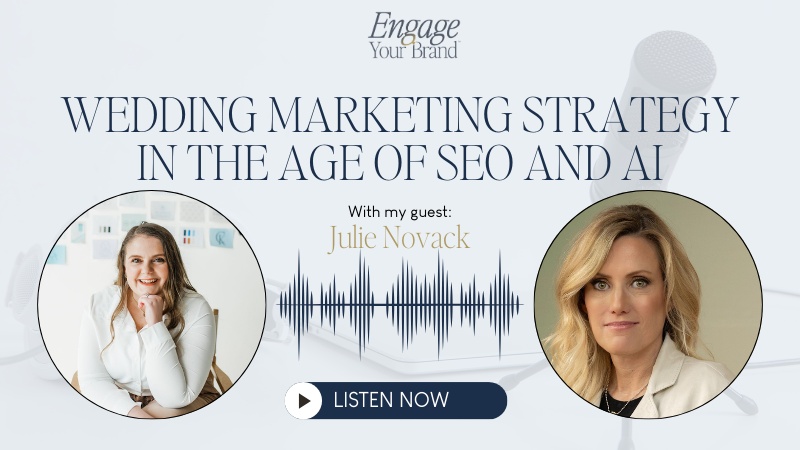
Julie has a deep digital marketing and tech background, and she brings such a grounded, practical perspective to what wedding and event pros actually need right now: a marketing presence that looks great, works hard, and supports your sales process behind the scenes.
Listen to the episode
If you want to hear the full conversation, you can listen to Episode 46: Wedding Marketing Strategy with Julie Novack on Spotify or Apple Podcasts or play it directly below.
(And while you’re listening, keep an eye out for Julie’s business-planning “press release” exercise, it’s one of those ideas that immediately makes you think, “Oh… I need to do this.”)
Meet Julie Novack, CEO + Co-Founder of PartySlate
Julie is the CEO and co-founder of PartySlate, a photo-rich marketplace that connects people planning events with top planners, venues, and vendors. She has more than 20 years of digital marketing experience, and she’s now leading PartySlate’s expansion into SaaS with AI-driven photo management tools that help pros organize, search, and share their content far more efficiently.
And one thing I loved about her perspective: she’s built a tech company for an industry full of small businesses, even when those businesses are housed inside larger brands (think hotel event teams that operate like small, scrappy departments).
Why Wedding Marketing Strategy Is Changing So Fast
Julie shared something that I agree with completely: yes, referrals matter. In fact, referrals are often the best lead source you’ll ever have.
But what happens immediately after a referral?
People research you.
They:
- Google you
- look at your Instagram
- check your website
- browse your portfolio
- look you up on marketplaces
- and now… they’re also using AI tools like ChatGPT
Julie mentioned the reality that most people go through seven to ten touchpoints before they ever reach out.
So the question becomes: what do your seven to ten touchpoints look like?
Because your marketing isn’t just “content.”
It’s the entire experience of being considered.
The Hidden Advantage of High Domain Authority
One of the biggest shifts Julie highlighted is how search engines often prioritize high domain authority platforms, the kinds of sites that are:
- rich with content
- fast-loading
- well-structured
- clearly organized
- easy for search engines to understand
This is why marketplaces (think: the “Yelp effect,” but for events) can show up prominently in search results. They’re informative. They’re content-dense. And they’re built to be easily understood by search engines.
PartySlate has spent years learning what actually moves the needle:
- site speed
- internal linking
- content structure
- rich portfolio content
Julie shared that this work has contributed to major growth in traffic and what matters most for wedding and event pros is that much of that traffic is real consumers with budgets, not just industry peers browsing.
“Have You Done This Exact Thing Before?” Handling Visual Objections
If you’ve been in business longer than five minutes, you’ve heard some version of this question:
- “Have you done a wedding like this before?”
- “Have you done an event in this venue?”
- “Have you done this color / this style / this layout?”
And on the inside, you’re thinking: Of course I can do this.
But Julie made such an important point: if a client asked the question, it matters to them. So we need to treat it as valuable information, not something to brush off.
This is where a strong Wedding Marketing Strategy becomes more than “posting consistently.” It becomes being able to show proof quickly, in a way that builds trust in real time.
Julie shared how PartySlate is evolving beyond a public marketplace by building PartySlate Pro, a private, AI-enabled photo library that helps pros search their own content fast so you can stop doing the dreaded “death scroll” on your phone trying to find the exact image that answers the client’s question.
And honestly? That’s not just a marketing tool. That’s a sales tool.
Where Your Content Supports Sales (Not Just Marketing)
A big theme throughout this episode was using your portfolio content strategically throughout your sales process.
Julie emphasized a few key moments where content makes a huge difference:
1. In the first response to an inquiry
She shared a stat from a hospitality sales coach: the first to respond is dramatically more likely to win the business.
And I loved the nuance here: it’s not about sending a robotic auto-response and calling it a day. It’s about responding quickly and personally.
Instead of:
- “Thanks for reaching out — here are my packages.”
Try:
- “I saw you mentioned a gala of 200–300 guests — I’d love to show you a few similar events and ask a couple questions to make sure we’re aligned.”
2. Getting them on a call (even if people say “no one wants phone calls”)
Julie had a really direct take here: if you’re trying to win a significant booking, whether it’s a wedding or a corporate event — you can’t rely on email alone.
You need a conversation to:
- qualify the lead
- guide the decision
- build trust quickly
- avoid the “let me think about it” limbo
3. Answering questions with confidence in real time
Instead of “I’ll send something later,” imagine being able to pull up three examples instantly and say:
- “I hear that’s important to you, let me show you a few ways we’ve done that.”
That’s the difference between a lead who feels unsure… and a lead who feels safe.
Quick Wins: Touchpoints to Audit This Week
This wasn’t a direct part of the episode, but it’s the natural takeaway I want you to walk away with.
If you want a stronger Wedding Marketing Strategy without adding more to your plate, start by auditing the touchpoints clients are already seeing:
- your website homepage (does it instantly say what you do + who it’s for?)
- your inquiry response (does it feel personal and confident?)
- your portfolio organization (can you find specific examples quickly?)
- your Google presence (do you show up for the terms you actually want?)
- your “about” messaging (does it build trust or just list credentials?)
Even tightening one of these can increase conversions, because you’re improving the experience of being considered.
The Marketing Planning Exercise I Want Everyone to Steal
Julie shared one of my favorite practical ideas in a long time: build your annual business plan around a “Northern Star”… and then write a future press release dated December 31st.
It’s essentially a vision exercise, but much more specific than a vague vision board.
Your press release includes:
- a headline about what changed in your business
- a short announcement describing the win
- quotes (yes, quotes!) that reinforce the strategy behind it
- enough detail to make it feel real
And here’s the best part: you can use AI tools to help you draft it quickly. Dump in your goals, past offers, numbers, and direction, then ask for:
- an annual plan broken into quarters
- plus a press release draft
It’s not about perfection. It’s about clarity.
Why Your Website Needs to Match Your Strategy
Julie said something that I wish every business owner would do before investing in a website: your site should directly support your business plan.
A few examples:
- If you want to be known for destination work, your imagery and messaging should reflect that.
- If you want to book corporate events, your content needs to show corporate work and speak directly to that audience.
- If you want higher-end clients, your website should prioritize trust, clarity, and positioning — not just a pretty aesthetic.
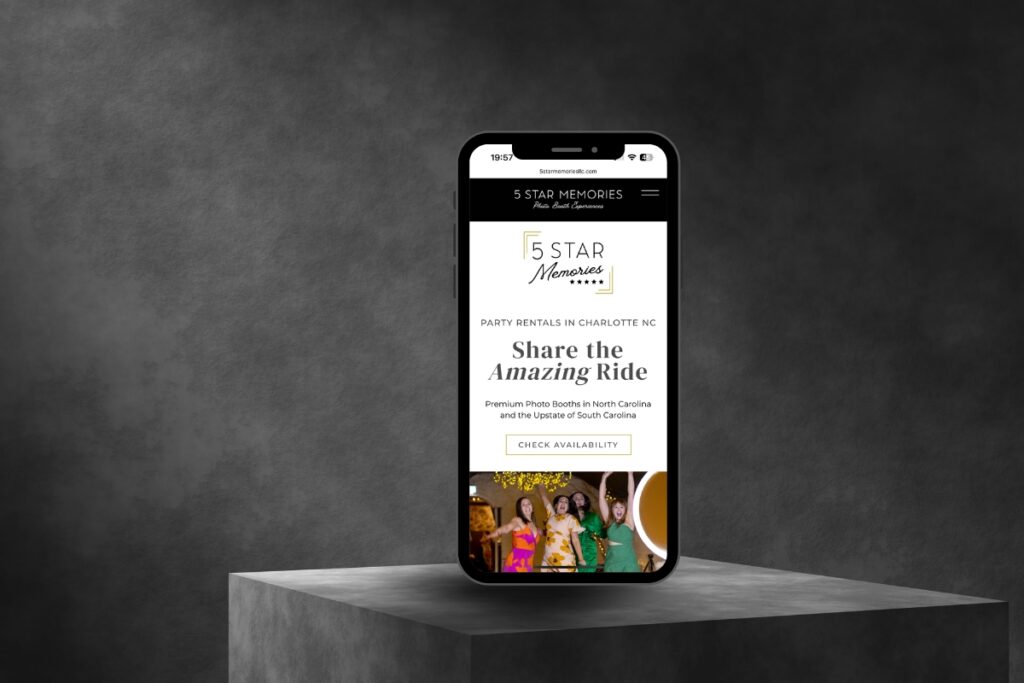
A website redesign without a clear strategic direction is one of the easiest ways to end up with something “pretty” that doesn’t convert.
The Outsourcing Reminder We All Need
Julie also brought up something that I think is a huge part of a healthy Wedding Marketing Strategy: delegation.
Not as a luxury. As a growth decision.
If you’re spending weeks (or months) trying to DIY something that isn’t your zone of genius, there’s a real opportunity cost.
Ask yourself:
- What can only I do in my business?
- What could someone else do faster, better, or more efficiently?
- What am I holding onto because it feels easier than delegating?
Marketing strategy is as much about focus as it is about tactics.
A Smarter, More Sustainable Wedding Marketing Strategy
If there’s one message I hope you take from this episode, it’s this:
You don’t need to do everything.
You need to build a marketing ecosystem that supports how clients actually buy now.
That means:
- a clear strategy for what you want to be known for
- touchpoints that build trust before someone reaches out
- a portfolio system that makes your work easy to show
- SEO and platforms that support visibility
- and a sales process that moves quickly and personally
If you want support tightening your digital presence so it actually converts — your website, your messaging, your SEO foundations, and how everything works together — you can learn more about working with us at emilyfostercreative.com.
And if you haven’t explored PartySlate yet, Julie shared that her team can help set up a free profile for qualified pros so you can get a feel for the platform and how it fits into your marketing mix.
Listen to Episode 46
If you’re ready to refine your Wedding Marketing Strategy for 2026, especially as AI search and client behavior keeps evolving, this conversation is a must-listen.
Search Engage Your Brand wherever you listen to podcasts and find:
Episode 46: Wedding Marketing Strategy with Julie Novack of PartySlate


Be the first to comment