
Wedding Business Tips for Building, Selling & Starting Over
Wedding business tips usually focus on growth. Book more clients, raise your prices, scale your team, and keep pushing toward the next goal. Rarely do we talk about what happens when the business you built no longer fits the life you want. Or what it looks like to sell something you poured years into, then figure out what comes next.
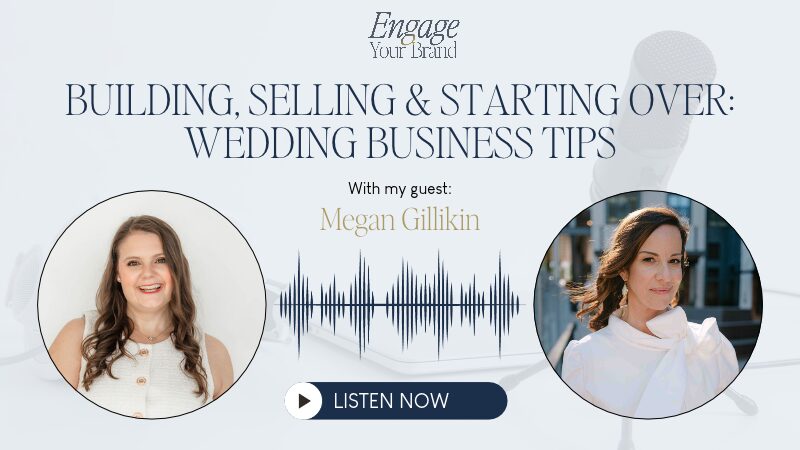
In this episode of Engage Your Brand®, I sat down with my friend Megan Gillikin for an honest coffee chat about building, selling, and starting over. Megan is an entrepreneur, business coach, speaker, and wedding industry veteran with more than 16 years of experience. She bought a wedding planning business at 26 and grew it for 12 years. She also founded The Planner’s Vault, an educational membership community for wedding planners.
🎧 Listen to this episode on Spotify or Apple Podcasts or play it directly below.
When we scheduled this conversation, Megan still owned The Planner’s Vault. By the time we recorded, the sale had closed. That timing made this conversation even more meaningful.
Buying a Business at 26
Megan started her career with Marriott Hotels. In 2010, she went on a job interview with a local wedding planner. That interview turned into an offer to buy the planner’s business.
She and her husband took out a small business loan. Megan left her full-time job and bought A Southern Soiree, a wedding planning company in North Carolina.
She described the business like a shiny apple in a fruit bowl. It looked great from the outside. But once she took a bite, it was a mess on the inside. At the time, she didn’t know what questions to ask before buying a business.
Looking back, Megan says her younger self didn’t overanalyze like she does now. She took the leap and trusted herself to figure it out. That theme of self-trust has followed her throughout her career.
I can relate to that. Even with a team and a growing business, trusting yourself can still feel hard. Megan pointed out that each new level of success can bring new doubts. Learning to move through that messiness is part of being an entrepreneur.
Why She Kept the Original Name
Many people asked Megan why she didn’t rebrand. The business’s reputation wasn’t great when she bought it.
For Megan, it felt meaningful to breathe new life into something that needed care. The business also came with a website, a brand presence, and past client reviews. Those assets were valuable when she was brand new.
There was a personal side too. She had taken out a loan to buy the business. Rebranding felt like admitting failure.
This is something I’ve been thinking about lately. I’ve been approached by two businesses this year about purchasing them. My chiropractor’s office was also bought and completely renamed. Whether to keep or change a name is a complex decision. There’s no single right answer.
Rebuilding Trust With Venues
The biggest challenge Megan faced was repairing relationships with local venues. She came from a venue background, so she walked in confident. She understood how hard venue teams work.
Instead, she heard story after story about how the previous owner had burned bridges. Megan realized she couldn’t expect referrals right away. She had to earn trust first.
This became one of the most important lessons she later taught other planners. Venue owners get frustrated when vendors ask how to join their preferred vendor list without investing in the relationship first.
How to Build Genuine Vendor Relationships
Megan shared a story about a hair and makeup artist who moved from New York to North Carolina. Before they ever met, this artist followed Megan’s planning business on Instagram. She liked, commented on, and shared posts consistently.
A few months later, they met at a networking event. As soon as the artist introduced her business, Megan knew exactly who she was. That connection grew into a long-standing working relationship.
The artist didn’t show up asking for something. She showed up as a supporter first. Megan says this approach worked in 2012, and it still works today.
Building relationships doesn’t have to take a lot of time. Here are a few simple ways Megan recommends showing support for other businesses:
- Engage on social media. Like, comment, and share their content in a genuine way.
- Bring them coffee. A small, thoughtful visit can make a lasting impression.
- Share their blog posts. Helping them get seen shows you value their work.
- Promote their events. Spread the word when they have something coming up.
These small gestures show you care about their success, not just what they can do for you.
How Relationships Increased Her Business Value
When Megan sold A Southern Soiree in 2022, those venue relationships made a major difference. She sold the business to a member of her team.
Over the years, her team had built strong partnerships where certain venues directed weddings to them. That created something rare in the wedding industry: recurring revenue from specific relationships.
Most wedding businesses work with a client once and hope for referrals. Megan’s business could show revenue coming in year after year from established partnerships.
Before the sale, the business went through a detailed financial assessment. The assessor could see which events were one-time bookings and which revenue was predictable. That history added real value to the business.

Running Two Businesses Through 2020
Megan launched The Planner’s Vault in February 2020, just weeks before the pandemic began. She was suddenly running two businesses at the same time.
She also had three young daughters at home, ages seven, five, and two and a half. Like many families that year, they also adopted a rescue puppy. Her husband had just left his full-time job to build his own business. That made Megan the family’s stable income earner.
Every night, they planned the next day in shifts. One would watch the girls while the other worked. That pace went on for a long time.
Megan is honest that it was far too much. It became one of the main reasons she reached burnout.
Why She Sold Her Planning Business
As the pressure grew, Megan realized she had to put something down. She loved working with wedding planners through The Planner’s Vault. Business-to-business work felt exactly right for her.
There were other reasons too. Megan says she never got into weddings because she was obsessed with weddings. She loved people, relationships, and the trust she built with clients.
Over time, her clientele shifted in a way that no longer felt aligned. The work brought her less joy.
The long wedding days also took a toll. She’d work a rehearsal Friday night, then leave around 10 a.m. Saturday. Many nights, she didn’t get home until midnight. Her family would already be asleep. The next day, she’d be exhausted while trying to be present for her kids.
Eventually, she had to ask where her energy was going and where she wanted it to go. That question led her to sell A Southern Soiree.
I know that feeling of being a shell of yourself the next day. I haven’t worked 25,000-step wedding days, but I’ve stayed up until 2 a.m. finishing projects. In mid-August, I removed email from my phone. It made me realize how often I was physically present but mentally somewhere else.
One night, my husband and I were watching Ted Lasso. I kept asking who certain characters were. He reminded me we’d watched every season together. I realized I’d been working through most of it. Megan removed email from her phone during her own burnout season too, and she said it was a huge relief.
Your Business Is Not Your Baby
Megan used to call her planning business her first baby. Now she sees that as an unhealthy way to relate to a business.
A baby needs constant care and attention. You can’t walk away from it. When we think about our businesses that way, every setback feels personal.
Losing a client or having a slower year doesn’t define your worth as a person. Your business is something you took a risk on and built. It will have successes and failures. Separating yourself from the business makes it easier to make healthy decisions.
When the Runaway Train Hits the Wall
From 2020 to 2023, Megan says she was going 100 miles per hour. She described feeling like a runaway train. She could see it moving too fast, but she couldn’t slow it down.
Some days, she had eight coaching calls back to back. She worked before her daughters woke up, between school drop-off and pickup, and again after bedtime.
In January 2024, the night before a major launch, she told her husband she felt like a shell of a person. That moment was the crack that led to a full burnout.
Megan wants to help high-achieving business owners recognize the signs before they reach that point. Recovery took a long time, and she hopes others can avoid that wall.

What Recovery Looked Like
Megan worked with a burnout coach for all of 2024. That year changed her deeply.
She made several important shifts in her business:
- She de-centered herself. The Planner’s Vault moved from being built around Megan’s face to highlighting its community and resources.
- She streamlined her team. Her business had four full-time team members and a significant payroll. Reducing that pressure helped her slow down.
- She delegated more. Her team took on more responsibility, giving her space to recover.
- She did deep mindset work. Megan explored where she learned that achievement was tied to love, belonging, and worth.
Megan pointed out something valuable for anyone who may want to sell someday. A business built entirely around the owner’s face is much harder to sell. Stepping back made The Planner’s Vault more independent.
In November 2024, Megan spoke on the main stage at Wedding MBA in front of 5,000 people. Standing there, she knew it would be her last time attending. She could feel that chapter coming to a close.
She also shared that burnout doesn’t wait for a convenient time. You can’t recover without inconveniencing anyone. As an empath and a high achiever, prioritizing herself sometimes meant disappointing people. That was hard, but necessary.
I compared it to cleaning out a messy closet. Everything has to come out and feel overwhelming before it can be organized again. Megan loved that comparison. You pull everything out, decide what to keep, and rediscover what was hidden.
Make Room for the Next Chapter
Megan’s story shows that growth isn’t always about building bigger. Sometimes it’s about knowing when to step back, change direction, or close a chapter with intention.
As your business evolves, your brand should evolve with it. If you’re preparing for a new season, a sale, or a shift in how you show up, your brand and website should reflect where you’re headed. Reach out to Emily Foster Creative to talk about a brand that supports your next chapter.
Permission to Change Your Mind
Today, Megan is figuring out what comes next for herself while helping other business owners do the same. She wants to give wedding pros permission to build something, love it, and still choose to change it.
The best wedding business tips aren’t only about growth. They’re about building relationships, protecting your energy, and creating a business that supports your life. You can love what you’ve built and still decide it’s time for something new.



Be the first to comment