

Showit vs WordPress: Which Platform is Right for You?
Showit vs WordPress is one of the most common questions I get from wedding pros and creative service providers who are ready to take their website seriously (as in: not just “pretty,” but actually working as a booking tool).
If you’ve ever felt stuck between two platforms because one looks easier and the other sounds “more powerful,” you’re not alone. And honestly? Both can be the right answer. It just depends on what you need your site to do, how you like to work, and how confident you want to feel making updates six months from now.
Listen to the podcast episode
This post is based on a recent episode of Engage Your Brand® where I walk through Showit vs WordPress specifically through the lens of wedding and event pros.
🎧 Listen to this episode on Spotify or Apple Podcasts or play it directly below.
If you’re choosing a platform because you’re about to redesign (or you’re sick of feeling stuck in a site you can’t update), I’d love to help. You can reach out through my contact form or DM me on Instagram, and we’ll talk through what makes the most sense for your business long-term.


Who is this blog for?
This comparison is written for creative service providers with portfolio-style work and service-based offers, like:
- Photographers
- Wedding planners
- Venue teams
- Videographers
- Floral designers
- Copywriters + brand designers
- Coaches and consultants in the wedding/event space
In other words: if your website needs to showcase your work, attract aligned inquiries, and support SEO without you needing a full-time tech team… you’re in the right place.
I’m also writing this with a very specific goal in mind: I want you to choose a platform you’ll actually keep updated. Because the worst-case scenario isn’t picking the “wrong” platform. It’s building something that collects spiderwebs because it feels too overwhelming to touch.
A quick mindset shift before we compare anything
Here’s what I want to clear up right away:
Your platform won’t save you.
But the wrong platform can absolutely slow you down.
No matter what you choose, it takes work to:
- Dial in the design
- Write strong copy
- Optimize for SEO (and yes, now GEO / AI search too)
- Build trust + guide people toward inquiry
- Keep the site updated over time
So instead of asking “Which platform is best?” I want you to ask:
Which platform will I actually use confidently?
Which platform supports my business model today (and next year)?
Which platform helps my site stay current without breaking every time I touch it?
That’s the lens I’m using throughout this post.
Showit vs WordPress at a glance: how they’re different
Think of it like this:
WordPress is the engine. It’s powerful, expandable, and has endless add-ons… but it requires maintenance.
Elementor (or another builder) is the “face” you build on top of WordPress to design pages.
Showit is a visual design platform (more like Canva in the way you build). If you have a blog on Showit, it’s powered by WordPress behind the scenes, which is actually a huge advantage for SEO and blogging.
So you’re not comparing “good vs bad.” You’re comparing:
A highly flexible ecosystem (WordPress)
Versus a highly visual, design-forward builder (Showit) that can still use WordPress for blogging
Ease of use: which one feels more intuitive?
This is where most people make their decision, and honestly, I get it.
Showit: built for visual thinkers
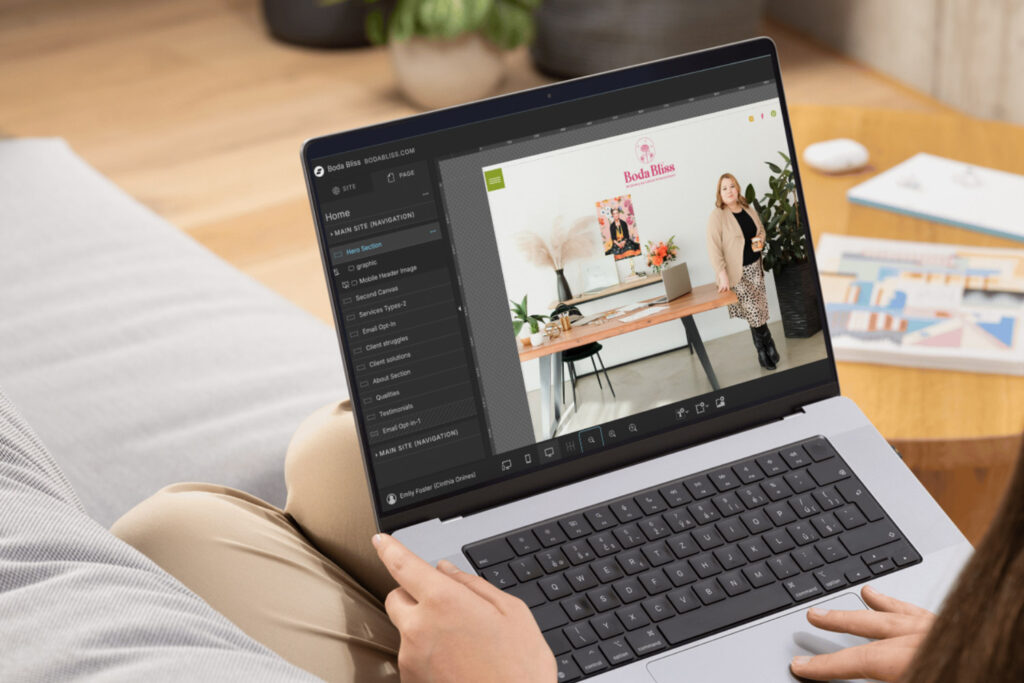
Showit is drag-and-drop in the most literal way. You can:
- Nudge something two pixels
- Overlap text on images
- Build layouts that feel completely custom
- Design desktop and mobile separately for more control
If you’ve ever used Canva and thought, “I wish my website builder felt like this,” that’s Showit.
There is one caveat: Showit gives you so much freedom that it’s possible to build a site that looks messy if you don’t have an eye for layout, spacing, and hierarchy. It’s like handing someone a fully stocked kitchen and saying, “Go cook.” You can make something amazing… or you can make chaos.
WordPress: powerful, but it doesn’t hold your hand
WordPress can feel intimidating because it’s not one simple interface. You’re managing:
- Your host
- Your theme or builder (Elementor, Divi, etc.)
- Plugins
- Updates
- Security
- Sometimes code snippets or settings that are not beginner-friendly
With a builder like Elementor, it gets much easier. If you go WordPress, Elementor is the route I recommend most often for wedding and event pros because it gives you more design flexibility than many other builders.
But the learning curve is still steeper, especially if you’re DIYing.
My honest take: If you want the experience of feeling empowered to make updates without fear, Showit tends to win for most creatives.
Creative freedom: who wins the design battle?
If you’re someone who cares deeply about how your site looks (and if you’re in the wedding industry, you probably do), creative freedom matters.
Showit’s strongest advantage: design flexibility without code
Showit was built with photographers and creatives in mind. The entire platform is designed around showcasing visuals beautifully.
You can:
Create custom layouts
Build unique portfolio pages
Make your site feel editorial
Add personality through layering, typography, and spacing
Control mobile design separately (which is a big deal)
For wedding pros especially, your website often needs to feel like an extension of your brand. Showit makes that easier.
WordPress can do anything… but usually not without extras
WordPress can absolutely create a stunning site. We’ve built gorgeous WordPress sites that convert and rank.
But the “pretty” often requires:
A strong theme or kit
A skilled designer/developer
Custom styling
More tools/plugins
More time troubleshooting
So yes, WordPress can be endlessly customizable, but it often takes more effort to get the same “wow” factor you can achieve quickly in Showit.
Blogging Capabilities
Blogging: the part everyone forgets to compare properly
This matters because blogging is still one of the most reliable ways to build long-term traffic and visibility.
Here’s what surprises a lot of people:
If you blog on Showit, you’re still using WordPress
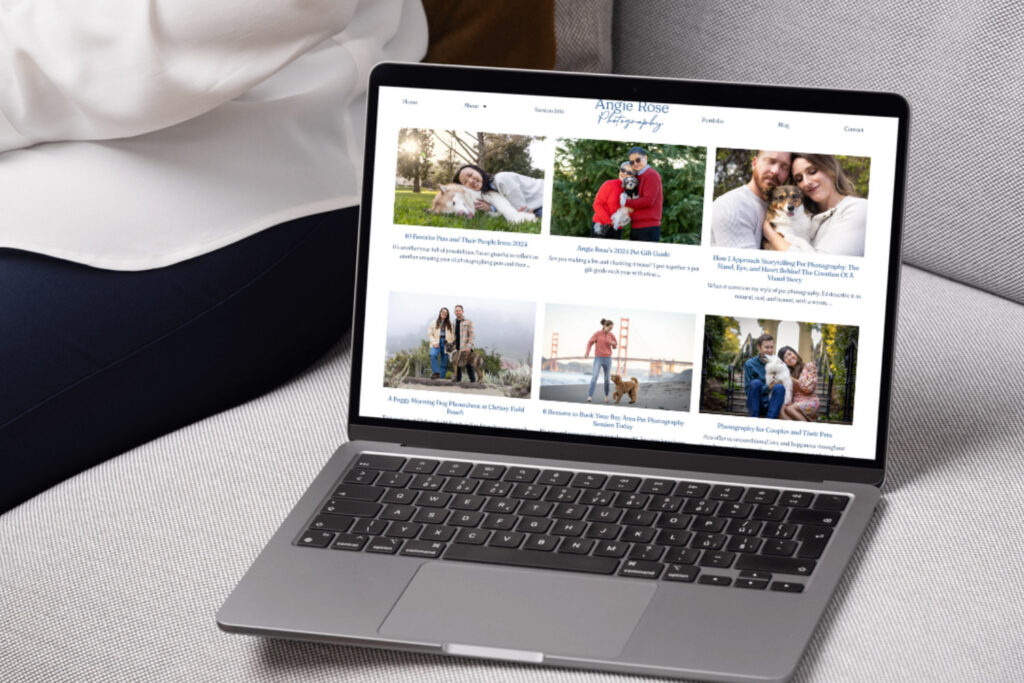
When you choose Showit + blog, your blog is hosted on WordPress. That means you can use plugins like Yoast SEO to optimize posts, improve your keyword strategy, set meta descriptions, and build SEO consistency over time.
So you’re not giving up WordPress by choosing Showit. You’re using WordPress where it matters most: on the blog side.
WordPress is still the gold standard for content management
If your business is very content-heavy, WordPress can be a great fit because it’s built to manage large amounts of content.
WordPress is especially strong if you want:
Advanced content organization
More complex blog functionality
Heavier integrations inside the blog
More robust publishing workflows
But for most wedding pros? Showit + WordPress blog is honestly the best of both worlds.
SEO
I want to be really clear here:
WordPress doesn’t guarantee SEO success.
Showit doesn’t guarantee SEO success.
SEO is earned through strategy and consistency, not platform magic.
So why does everyone say WordPress is “better for SEO”?
A few reasons:
- WordPress has been around longer, so there are more long-established sites on it
- People confuse “more tools” with “better results”
- Some agencies push WordPress as the only option (often because they want you locked into hosting + maintenance)
Here’s the reality I see as a studio:
- We have clients ranking on the first page of Google on WordPress
- We have clients ranking on the first page of Google on Showit
- We’ve seen massive traffic growth on Showit after proper optimization
SEO basics apply to both:
- Page titles + meta descriptions
- H1/H2 heading structure
- Alt text on images
- Keyword strategy (without stuffing)
- Site speed + performance
- Strong copy and internal links
- Consistent blogging and updates
If you’re serious about SEO, the question isn’t “Which platform ranks better?”
It’s:
Which platform helps me stay consistent enough to actually do the work?
Customer Support: this is where Showit is wildly different
If you’ve ever had a tech issue and felt your stomach drop because you didn’t know who to ask… you’ll understand why this matters.
Showit support is human and accessible
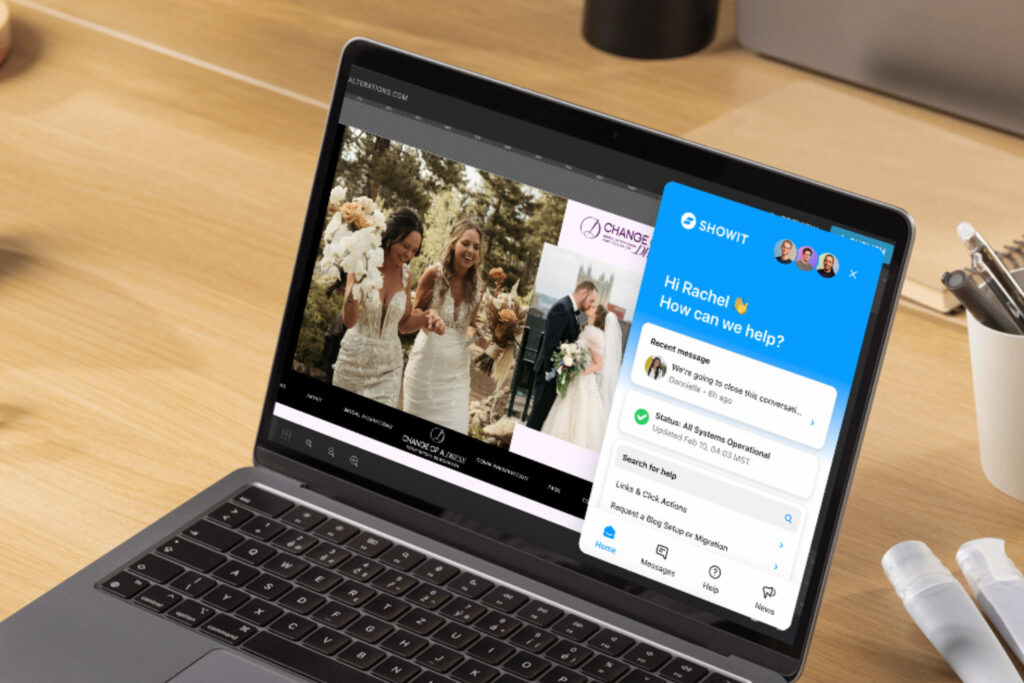
Showit has chat support that is genuinely helpful. You can message their team and get real guidance, not just a forum thread from 2017.
They can help with:
- Troubleshooting issues
- Setup questions
- Domain connection support
- Blog transfer support
- General “how do I do this?” questions
For a small business owner, that support can be the difference between “my site stays updated” and “I never touch it again.”
WordPress support depends on who you’re paying
WordPress is open-source, so there’s no one official support team. Support usually comes from:
- Your hosting company
- Your web designer/developer
- Whoever made your theme or kit
- Forums and documentation (helpful, but not always fast)
So if you don’t have someone in your circle who understands WordPress, it can feel like you’re on your own.
Security and maintenance: what people don’t think about until something breaks
This is the unsexy part of websites… until it becomes the most important part.
Showit simplifies security
Showit manages a lot of the behind-the-scenes infrastructure for you. That means fewer things you need to manually maintain as a business owner.
WordPress requires ongoing upkeep
WordPress can be secure, but it typically requires:
- Regular plugin updates
- Theme updates
- Version updates
- Security monitoring
- Backups
- Occasional troubleshooting when something conflicts or breaks
And here’s the part I see constantly: many small business owners don’t realize they’re responsible for that upkeep until a plugin update breaks something.
If you want a lower-maintenance experience, Showit usually wins.
Integrations: WordPress has the advantage here
If you want maximum integration options, WordPress is hard to beat.
Because WordPress has such a huge ecosystem, there are plugins for nearly everything:
- Advanced forms
- CRM integrations
- Memberships
- Complex e-commerce
- Custom functionality
- Automation tools
That said, Showit integrates beautifully with the things wedding pros use most often:
- Email opt-ins (Flodesk, MailerLite, Kit, etc.)
- CRM forms (HoneyBook, Dubsado, Rock Paper Coin, PlannerPod, etc.)
- Small shops (ThriveCart, Shopify buy button / starter plan)
So WordPress wins on sheer volume of options, but Showit is more than capable for most creative service businesses.
Pricing: what you’re really paying for
Pricing can vary a lot, but here’s the simplest way to think about it:
Showit
You pay for a Showit subscription (pricing can change over time), plus your domain.
If you blog, your plan includes the WordPress blog side.
What you’re paying for is a more streamlined experience and support.
WordPress
WordPress itself is free, but you’ll pay for:
- Hosting
- A builder (Elementor, etc.)
- Potentially a template/kit
- Plugins (some free, some paid)
- Maintenance/support (if you hire someone)
WordPress can be budget-friendly, but it can also become more expensive if you’re stacking paid tools, kits, and support.
Switching from WordPress to Showit: what the process looks like
This is one of my favorite transitions, especially compared to switching from platforms like Wix or GoDaddy.
Here’s why: Showit can use a WordPress blog, so blog content can often transfer in a more seamless way.
In general, the process looks like:
- Choose a Showit plan (especially if you want blog transfer)
- Design the new site in Showit
- Request blog setup + blog transfer
- Connect domains + DNS settings
- Test everything, launch, and redirect properly
- Cancel the old hosting/builder subscriptions you no longer need
There are always nuances based on how your original WordPress site was built, but overall it’s typically a clean transition when handled correctly.
TL;DR: which one should you choose?
Choose Showit if:
You want a highly custom, design-forward website
You’re a visual thinker and want drag-and-drop freedom
You want customer support you can actually access
You want a platform that feels empowering to update
You value creative flexibility for portfolio-style work
Choose WordPress (with Elementor) if:
You want maximum integrations and customization options
You’re comfortable managing plugins and updates (or you have support)
You want a robust content management system for heavy blogging/content
You prefer a more structured design framework
You want long-term flexibility and don’t mind the learning curve
And if you’re still torn, ask yourself this:
Which platform will I actually keep updated?
Because the best website is the one you’ll use consistently.
Ready to Build Your Dream Website?
If you want a website that looks elevated and supports your marketing strategy, I’d love to help you build it in the platform that makes sense for your business.
You can:
Reach out through my contact form
DM me on Instagram @emilyfostercreative
Or explore my Showit templates if you want a polished DIY option without starting from scratch
And if you haven’t listened to the episode yet, scroll back up and hit play. It’ll help you feel way more confident in your decision.



Be the first to comment