

Wedding Business Systems That Make Room for Hospitality
Wedding business systems aren’t usually the reason anyone falls in love with this industry. Most of us start our businesses because we love design, celebration, creativity, or the joy of helping couples on one of the biggest days of their lives. Then the business grows, the inbox fills up, every client gets handled a little differently, and suddenly everything lives in your head. It’s easy to worry that adding structure will make your business feel rigid or less personal.
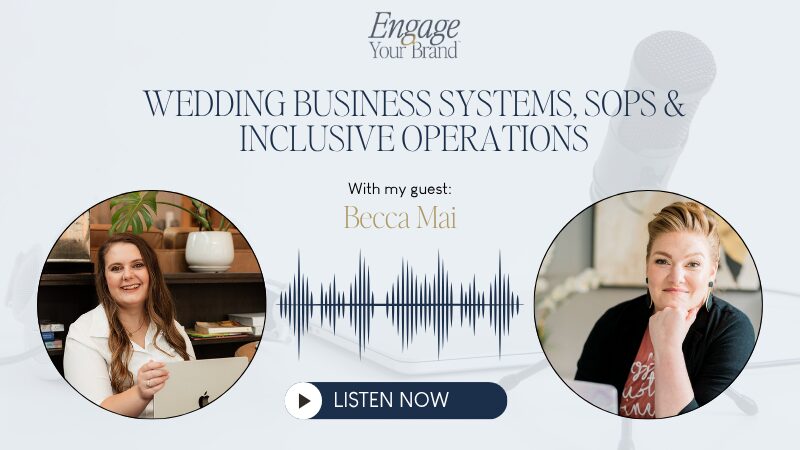
In this episode of Engage Your Brand®, I’m joined by my friend Becca Mai, founder of Wed 2 You. Becca coaches and mentors wedding professionals and creatives, and she still plans weddings in the DC area, so she’s deeply connected to what’s happening in the industry right now. With more than 14 years in weddings and events, she helps wedding pros build SOPs and systems rooted in hospitality and empathy.
🎧 Listen to this episode on Spotify or Apple Podcasts or play it directly below.
Becca and I also have a history of working together. My team designed her brand and website, and she helped me overhaul my own systems, which became the foundation for so much of how my business runs today. So this conversation was a long time coming.
Systems Are Black and White. Hospitality Lives in the Gray.
Throughout her career in restaurants, venues, and catering, Becca has been known as the SOP queen. SOPs, or standard operating procedures, are the documented steps for how your business handles each part of its work.
Becca shared a perspective that stuck with me. Systems are black and white, but hospitality lives in the gray. Without clear lines and boundaries, it’s hard to know where you can be flexible and generous with your clients.
Her biggest systems project came while working at a premier DC venue just before the pandemic. She built all of their SOPs so clients would feel personally cared for instead of feeling like they were moving through a wedding factory. That system is still used for the company’s newer properties today.
This is an important reminder for anyone hoping to move into a more premium market. Elevating your business isn’t only about branding, marketing, and pricing. It’s about delivering a consistent, thoughtful experience every single time.
Your Operations Create Your Reputation
Many wedding pros put most of their energy into the sales process. But Becca emphasized that operations, everything that happens after a client books, is what clients remember most.
The planning journey leading up to the wedding day matters just as much as the event itself. If communication feels clunky, steps get missed, or the experience doesn’t match the brand clients fell in love with, it affects the overall experience. That’s where reviews and referrals are won or lost.
This applies to every type of wedding pro. Whether you’re a planner, venue, photographer, or DJ, a clear and consistent experience can take your business to a new level.
Why Wedding Pros Avoid Building Systems
Becca sees a few common reasons wedding pros put off creating SOPs and systems.
First, most people enter the industry because of their creativity and passion. Hustle can carry a business for a while, but it isn’t sustainable. Becca would love to put out the fire of hustle culture in our industry for good.
Second, many pros worry systems will make them lose the human touch. They imagine everything becoming automated and impersonal. Becca’s response is that automating doesn’t mean auto-sending. Systems are about optimizing your business so you have more time and flexibility to create a better experience.
Third, some fear that boundaries will turn away ideal clients or make them seem inhospitable. In Becca’s experience, it’s the opposite. People respect boundaries.
She shared an example of a client who texted her on a weekend. Becca didn’t respond until she was back in the office on Tuesday. By then, the client had already answered her own question and simply appreciated knowing when Becca would be available. When Becca once responded outside her normal hours, the client even told her not to feel like she needed to do that.
Do You Really Need to Respond Right Away?
Some wedding pros believe they need to respond immediately to prevent clients from feeling anxious. Becca agrees that urgent situations, especially the week of the wedding, require quick responses. But non-urgent questions nine months out shouldn’t create anxiety if you’ve set clear expectations.
If a client is stressed by slower responses, Becca suggests asking yourself a few questions:
- Did I set clear boundaries? Clients need to know your office hours and how you communicate.
- Did I remind them of those boundaries? Expectations should be reinforced throughout the process.
- Did I give them the right communication channels? Clients should know where and how to reach you.
If you’ve done all of that and a client still needs constant availability, they may not be the right fit for your business. Around-the-clock availability does exist in the ultra-luxury space, but it’s not the only way to serve clients well.
Keep Sales and Operations Consistent
One of the biggest lessons from this conversation is that your sales process sets expectations for the rest of the client experience. If you’re texting an inquiry at midnight, you can’t expect that client not to text you at midnight after they book.
Becca doesn’t respond to weekend inquiries, and when she works outside office hours, she schedules her emails to send during business hours. Her contact form explains when people can expect to hear back and lets them know she works weddings on weekends.
Auto-responders are a personal choice. Becca doesn’t use one because she finds them a little disappointing as a recipient, though she acknowledges they can help clients know what to expect. Either approach can work. What matters is consistency.
She also doesn’t believe slower weekend responses automatically mean losing Gen Z clients. In her experience, Gen Z couples respect boundaries. The key is being consistent from the first interaction onward, especially if you’re balancing a full-time job, personal life, or both.
Where to Start When Systems Feel Overwhelming
Systems can feel overwhelming because people picture their entire business all at once. Becca recommends approaching it the same way planners help couples plan a wedding, in manageable phases.
Start by dividing your business into two funnels:
- Sales. Everything from inquiry until the client books.
- Operations. Everything from onboarding until offboarding.
Then break each funnel into phases. For example, your sales process might include inquiry, discovery call, proposal, and contract. Focus on one phase at a time and document how you handle it.
Becca suggests setting aside 30 minutes to an hour on your CEO days, those dedicated days for working on your business instead of in it. If systems work is something you dread, do it first. She worked with a baker who hated answering emails, so she moved email to the start of her CEO day before anything else. Now she gets through it quickly.
Get Out of Your Inbox
So many wedding pros feel like they aren’t working unless they’re in their inbox. I can relate, since I check mine far more often than I’d like to admit.
Becca relies heavily on time blocking. Living with multiple sclerosis has made structure especially important for her focus, and time blocking keeps her from spinning her wheels all day. Here are a few of her inbox strategies:
- Check email at set times. For example, once in the morning, once around midday, and once before logging off.
- Pause your inbox. Tools like Boomerang, Gmail, and Outlook can hide new messages during focused work time.
- Create a priority system. Becca uses starred labels to separate emails that need a response, information-only emails, and messages she’s waiting on.
- Snooze non-urgent emails. On CEO days, she snoozes client emails until the next day so she can stay focused.
How to Know You’ve Outgrown Your Systems
Sometimes systems don’t need a full overhaul, just updates. Becca shared a few signs it’s time to reevaluate:
- Your current setup isn’t sustainable anymore. What worked as a solo owner may now feel exhausting.
- You’re preparing to grow a team. Systems that only make sense in your head won’t work for team members.
- You’ve outgrown your platform. A CRM like HoneyBook may be a great start, but some teams eventually need something different.
- Someone else couldn’t follow your process. A great test is whether you could hand it to someone and they could complete it without asking you questions.
Many wedding pros already have systems, but they only exist in their heads. Becca calls this moving from brain to paper.

What SOPs Should Actually Look Like
Becca recommends writing SOPs in a Google Doc or Word document, then adding supporting Loom videos, recordings, or screenshots. Team members learn differently, so offering both written and visual guidance makes your systems easier to follow.
She also recommends auditing your systems at least once a year. Walk through each phase and ask what’s working, what isn’t, and whether there’s a better way to do it.
Most importantly, have someone else review your systems. As business owners, we can do our processes in our sleep. Our brains naturally skip ahead, which means we often leave out steps that seem obvious to us but aren’t obvious to anyone else. A trusted friend, business coach, or operations business manager can catch those gaps.
Using AI Thoughtfully
AI can help you organize and refine your systems, but Becca offered an important caution. AI is a people-pleaser. Like many wedding pros, it wants to give you an answer that makes you happy, even if that answer isn’t the best fit for your business.
Use AI as a tool, not a replacement for your thinking or for real human feedback. Becca also encourages using AI mindfully because of its environmental impact. Instead of firing off lots of one-line questions, give it detailed prompts with as much context as possible. She often uses voice dictation so she can explain the full situation in her own words.
She even named her AI assistant Linda, imagining a warm, wise colleague who tells it like it is. Giving it a persona reminds her to approach it thoughtfully instead of overusing it. And yes, we both agreed that saying thank you to your AI doesn’t hurt.
Build Inclusivity Into Your Systems
Becca is queer and disabled, and she’s also the co-founder of a nonprofit that educates wedding professionals on inclusivity and accessibility. For her, inclusive operations are part of everyday hospitality, not an extra step.
She shared several simple ways to make your systems more inclusive:
- Ask for pronouns. Add a place for pronouns on your inquiry form, just as you would ask politely in conversation.
- Use inclusive language. Say “wedding party” instead of “bridal party,” and consider terms like “best person” instead of gendered titles.
- Ask about accessibility needs. Becca’s get-to-know-you questionnaire asks whether the couple or their family members have needs she should know about, with examples like an interpreter or caregiver.
- Plan for breaks. She asks whether couples would like quiet moments during the day and builds buffers into the timeline for anyone who may feel anxious or overwhelmed.
When clients feel safe and welcome, they share more with you, and that helps you serve them better. Becca also emphasized that inclusivity means celebrating all couples, cultures, traditions, body sizes, skin tones, abilities, and identities, and doing it year-round, not only during specific months.
To me, this is exactly what systems and inclusivity have in common. Both are about anticipating your clients’ needs before problems arise and helping every person feel cared for.
A Brand That Reflects Who You Are
When I asked Becca about her business name, she explained that Wed 2 You reflects her commitment to both her planning couples and the wedding pros she coaches. She’s dedicated to them, or “wed to” their success.
Her biggest branding challenge was worrying that her brand might feel too loud. Becca is colorful, outspoken, and vibrant, and she wondered whether that would turn people away. During our branding process, we leaned into those qualities rather than toning them down. The result is a brand that feels bold and colorful while still communicating care and support.
That’s what effective branding should do. It should feel welcoming to the right people while being honest that it isn’t meant for everyone.
Becca’s advice for building an effective brand is to DIY when you’re first starting, then invest when you’re ready to turn your business into a real career. Whether it’s a designer, coach, or systems expert, working with professionals can save you time and help you create something that truly reflects you.
If your brand or website no longer matches the experience you deliver, Emily Foster Creative would love to help. Reach out to us to talk about a brand and website that support the business you’re building.
Structure That Supports Your Clients and You
Strong wedding business systems don’t take the heart out of your business. They make room for it. When your processes are clear, you can respond with intention, protect your time, and create a consistent experience that helps every client feel cared for.
Start small. Pick one phase of your business, get it out of your head and onto paper, and keep building from there. Over time, those systems become the foundation for a business that supports both your clients and your life.
Connect with Becca Mai


Be the first to comment