

Wedding Industry Networking Tips for a Brand That Lasts
Wedding industry networking tips often make it sound simple. Show up to a few events, hand out some business cards, and wait for referrals to roll in. But if you’ve ever walked into a crowded mixer and immediately looked for the nearest corner, or gone to event after event without seeing a single booking, you know it’s rarely that easy. Networking can feel awkward, slow, and sometimes discouraging.
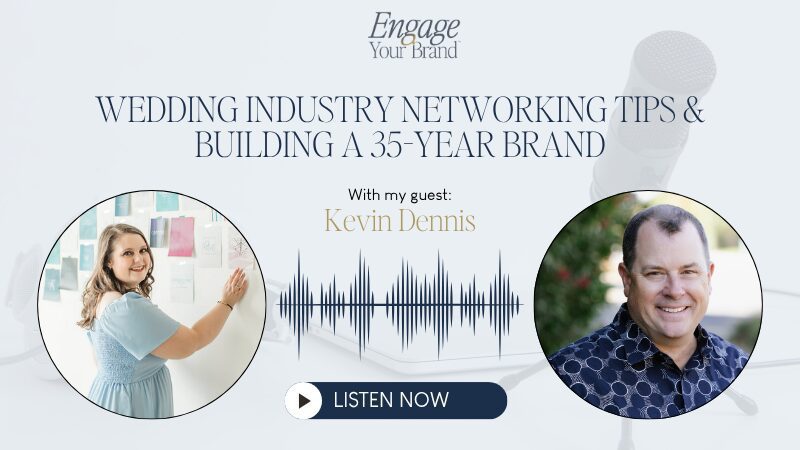
That’s why I loved this conversation with my friend Kevin Dennis. In this episode of Engage Your Brand®, Kevin shares what more than 35 years in the event industry have taught him about relationships, community, and building a brand that lasts. Kevin owns Fantasy Sound Event Services, a full-service event company in Livermore, California, and he’s the editor of WeddingIQ. He also founded the Tri-Valley Wedding Professionals, served as the 2025 president of the NACE Foundation, and hosts two podcasts.
🎧 Listen to this episode on Spotify or Apple Podcasts or play it directly below.
In an industry where many businesses don’t make it past five years, that kind of longevity is rare. And one of the most refreshing things about Kevin is how humble he is about it. Even after decades in business, he’ll be the first to tell you he’s still learning.
A Brand Built on Showing Up
Kevin’s story starts in high school. He jokes that he was a self-proclaimed nerd who noticed the DJ always seemed to be the most popular person in the room, so he decided to become one. He started DJing for other companies at 16, saved enough to buy his own equipment by 19, and launched his business in 1989.
For the first few years, DJing was something he did alongside college and a job at a before- and after-school daycare. Then he noticed something important. He was putting the least amount of time into his DJ business and earning the most money from it. If he invested more energy, the business could grow even more.
In 1992, his dad’s boss invited him to a weekly networking group. After the first quarter as a guest, membership would cost $120 per quarter. At the time, that felt like a lot of money. But it turned out to be one of the best investments Kevin ever made. One of the clients he met there is still his biggest client today.
That early lesson set the tone for everything that followed. Kevin’s brand wasn’t built on a single big break. It was built on consistently showing up and investing in relationships.

When Your Name No Longer Fits Your Services
Every long-standing brand eventually runs into growing pains, and Kevin’s biggest branding challenge comes from his business name. Fantasy Sound was chosen on a whiteboard with friends while he was working at U-Haul. It stuck, and in 1995 the company became Fantasy Sound Event Services as it expanded into audiovisual work.
Today, the business offers lighting, drapery, chandeliers, and much more. Sound is actually one of the smallest parts of what they do. The name has caused some funny problems over the years too, including emails being blocked by his kids’ school district because the word “fantasy” gets flagged as inappropriate.
Kevin has considered rebranding to something like FSES, but he’s hesitant. He watched a local rental company change its name, and more than a year later, people were still calling it by the old name. When you’ve been part of a market for decades, a name change is a big lift.
Instead, Kevin and his team rely on education to close the gap. Their website, social media, and blog help clients understand everything they offer beyond what the name suggests. If your business has outgrown its name but a full rebrand doesn’t feel right, clear messaging and helpful content can do a lot of the work for you.
Networking Is a Two-to-Three-Year Investment
When I asked Kevin for his best tip on building an effective brand, he didn’t mention logos or color palettes. His advice was to go to networking events and accept that you probably won’t get work from them for two to three years.
That’s a hard truth, especially for newer business owners who want quick results. But it reflects how trust really works in this industry. Planners, venues, and other vendors refer people they know, like, and trust. That takes time and repeated contact.
Kevin also pointed out that your timeline depends on your category. If you’re one of many, like a photographer, planner, florist, caterer, or DJ, it will usually take longer to stand out. If you offer something unique, like live painting or cigar rolling, you may gain traction much faster because there’s less competition.
There are ways to speed up the process, though. Here’s what Kevin recommends if you want networking to pay off sooner:
- Attend consistently. Showing up once or twice a year won’t build lasting relationships. Regular attendance helps people remember you.
- Get involved. Joining a committee, volunteering, or sponsoring a group puts you in front of people more often and builds credibility.
- Be genuinely helpful. When a venue has a last-minute need, being the vendor who shows up makes a lasting impression.
- Stay patient. The referrals may not come right away, but steady relationship-building compounds over time.

Generosity Needs Boundaries
Kevin believes relationships are everything, and that includes relationships with competitors. Having friends in the industry is healthy, and those connections often lead to referrals and support when you need it most.
At the same time, Kevin is honest that some relationships can become one-sided. In his area, which has many wineries, he has seen situations where vendors ask for help with events but never refer business back or consider his team for paid opportunities.
The goal is to be helpful without being taken advantage of. Show up for people, but pay attention to whether the relationship is mutual. Healthy partnerships involve giving and receiving.
Build the Community You Wish You Had
One of the biggest factors in Kevin’s local recognition is the Tri-Valley Wedding Professionals. The group was born out of a simple problem. Most networking events in the Bay Area took place in San Francisco, about 45 minutes away without traffic. Kevin and a few colleagues kept driving into the city to network, but they weren’t meeting vendors from their own area. They also didn’t want to work in the city every weekend, where traffic, sporting events, festivals, and parades can make load-in times stressful and expensive.
So they created their own local group, inspired by the model of WIPA. Today, the Tri-Valley Wedding Professionals meets four times a year, and its list has grown to nearly 700 people. The first event of each year is casual and social. They’ve hosted headshot sessions, networking bingo, and speed networking. The remaining three events are educational, bringing in speakers to help the local community grow together.
The result is powerful. When someone new joins the area, people tell them they need to meet Kevin and his team. Their community now does much of the introducing for them.
You don’t need to launch a formal organization to apply this idea. A few planners can meet for coffee every other month to share ideas and referrals. Photographers can trade tips about local venues. Vendors who are booked on a certain date can refer couples to trusted colleagues. Community over competition truly helps everyone rise together.
Kevin also offered a helpful reminder about social media. Some weekends, your competitors will post event after event while you have nothing on the calendar. Other weekends, it will be the opposite. It all evens out, so try not to let comparison take over.

Stay Open to New Ideas, No Matter How Long You’ve Been in Business
When I asked about the mindset that has helped him last, Kevin said he has learned that his way isn’t always the right way. He listens to his team, including the high school students who help set up weddings during the summer. Some of his best process improvements have come from staff who discovered faster or easier ways to complete an install.
As a former national WIPA president, Kevin noticed that some experienced professionals believe they already know everything. That mindset can be dangerous. Clients now communicate differently, technology is constantly changing, and AI is reshaping how people find and evaluate businesses. If you’re still doing business the way you did five or ten years ago, you risk becoming outdated.
Kevin’s approach to conferences and educational events is simple. If he learns one thing that saves time, improves the client experience, or makes work easier for his team, it was worth attending. He has seen this play out locally too. At one Tri-Valley event, a longtime photographer who had been hesitant about social media attended a session on the topic and started posting consistently afterward.
Learning can happen anywhere, including during an event itself. Instead of ignoring the other vendors around you, start a conversation. Someone may share a referral, an idea, or practical advice about a venue you’ve never worked at before.
A Team That Shares the Mission
Kevin hired his first employee in the mid-1990s, and he remembers what it was like to do everything himself. Some days, he would spend hours running sound for a chamber luncheon and come back mid-afternoon to a full answering machine. He was likely losing business simply because there wasn’t enough of him to go around.
One of his most important hires came at an unexpected moment. Lindsay had signed to play professional volleyball in Spain, but a shoulder injury ended that path. Kevin offered her a role as his assistant, and over time she grew into the person who now runs much of the company.
When I asked how he builds a team that feels connected to the brand, Kevin shared three essentials. The team meets regularly, works toward a common goal, and has fun together. Stressful days will happen, but when people feel valued and enjoy their work, they’re far more invested in the business.
You’re Only As Good As Your Last Event
One thing Kevin believes people misunderstand about long-term brands is the idea that years in business are enough on their own. As he puts it, you’re only as good as your last event. A great reputation can be damaged quickly if quality slips.
That’s why Kevin keeps evolving his services. His team gets genuinely excited about new inventory, like a sage green drapery that has become their new favorite. They’ve also updated their phone system so clients can text them and now communicate through Instagram DMs. Kevin admits he has always been resistant to change, but he has learned that meeting clients where they are matters more than personal preference.
His longest-running holiday client is a great example of what adapting looks like. Kevin’s team has produced their event for almost 18 years, through three different client contacts. Each contact worked differently, so his team adjusted their communication and process while keeping the quality and fun consistent. Those relationships have to be rebuilt each time someone new takes over. When a venue coordinator leaves, you might fall off a preferred vendor list. When a corporate contact changes, they may bring in their own vendors.
Staying flexible doesn’t mean giving away the farm. Kevin is clear that you can adapt while still protecting your values and boundaries.
Where to Focus When You’re Just Getting Started
For newer pros trying to grow in a competitive market, Kevin recommends focusing on two things: strong processes and getting yourself out there.
A good CRM and clear systems may not sound exciting, but they make growth possible. Many businesses get busy before they have the tools to support that volume. Setting up those processes early helps you handle more inquiries without everything falling apart.
Kevin also shared a pricing lesson from his early days. When a school offered half of his $500 rate for a dance, he accepted. That choice made it much harder to charge what he was worth later. Once you start giving in, it’s difficult to win that ground back.
And if networking feels uncomfortable, you’re in good company. Kevin can speak confidently in front of thousands of people but dislikes walking into a big networking room. These networking approaches have helped him most:
- Bring a buddy. Having someone with you makes it easier to navigate a crowded room.
- Find smaller conversations. Sitting at a table and talking with a few people often feels more natural than mingling.
- Ask questions and listen. Kevin once formed a friendship with a leader from The Knot simply by chatting over a disappointing conference lunch.
- Be yourself. You don’t need to act like a salesperson to make a meaningful connection.
A Strong Brand Opens the Door, Relationships Keep It Open
In my work with wedding pros, I often talk about the two sides of a successful brand. You need a brand and website that impress clients and vendor partners, and you also need the relationships that bring people to you in the first place. A beautiful website alone won’t create overnight success, and networking alone can’t do the job if your brand doesn’t clearly communicate what you offer.
If you’ve outgrown your name, added new services, or feel like your website no longer reflects the business you’ve built, Emily Foster Creative can help. We create brands and websites that support the relationships you’re already building. Reach out to us when you’re ready to talk.
Keep Showing Up and Keep Learning
Kevin’s story is proof that lasting brands aren’t built overnight. They’re built one conversation, one event, and one relationship at a time. The best wedding industry networking tips come down to patience, generosity, community, and a willingness to keep learning.
Even after decades in business, Kevin still believes he doesn’t know everything. That openness may be the biggest reason his brand continues to grow. If you keep showing up, stay curious, and invest in people, you’ll be building something designed to last.
Connect with Kevin Dennis
- Websites: Fantasy Sound Event Services and WeddingIQ
- Instagram: @fsesevents and @wedding_iq
- Facebook: Fantasy Sound and WeddingIQ
- LinkedIn: Kevin Dennis
- TikTok: @fsesevents
- YouTube: Fantasy Sound Events and Mind Your Wedding Business
- Pinterest: Fantasy Sound



Be the first to comment