
Showit Template Customization vs Custom Website Design
If you’ve ever found yourself stuck between investing in a Showit website template or hiring a designer for a custom website, you are not alone.
This is one of the most common questions I hear from wedding professionals and creative business owners, especially as businesses begin growing and online visibility becomes more important. On the surface, templates can seem like the obvious answer because they are often more affordable and promise a quicker launch. At the same time, custom websites are constantly positioned as the “luxury” or long-term solution.
But the truth is, the answer is not as black and white as the internet often makes it seem.
In this episode of Engage Your Brand®, I’m breaking down what Showit template customization actually means, how it differs from a fully custom website design, and how to know which direction is the right fit for your business stage, goals, timeline, and marketing budget.
🎧 Listen to this episode on Spotify or Apple Podcasts or play it directly below.
Because at the end of the day, the best website is not necessarily the most expensive one.
It is the one that supports your business strategically.
What Is Showit Template Customization?
One of the biggest misconceptions in the design industry is that buying a website template means you are getting a rigid or non-customizable website.
That is not really how Showit works.
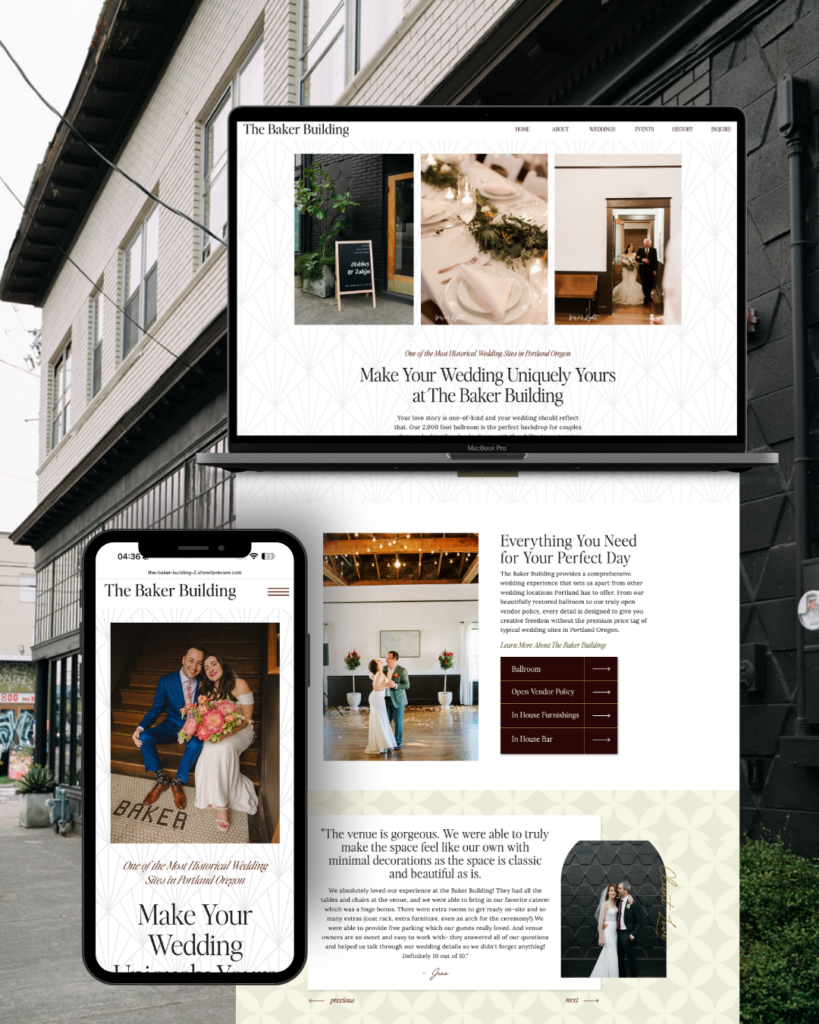
Unlike many other website platforms, Showit allows for a very high level of visual customization without requiring advanced coding knowledge. This means a template is not simply a locked design where you replace a few images and call it done.
With Showit, templates can be:
- Reorganized and restructured
- Updated with new layouts and sections
- Customized with your branding
- Expanded with additional pages
- Adjusted for your client experience and strategy
This is why Showit templates are so popular in the wedding industry specifically.
Wedding professionals often need websites that feel:
- Highly visual
- Emotionally immersive
- Brand-forward
- Flexible for galleries and storytelling
And Showit gives business owners the ability to create that experience without needing a fully coded custom website.
However, flexibility is also what makes template customization more complex than many people expect.
A Website Template Is Not Automatically “Easy”
One of the most important points from this episode is that templates are often marketed as simple, quick solutions when in reality, they still require a significant amount of strategy and implementation.
A template can absolutely save time and money compared to building a custom website from scratch.
But purchasing a template does not instantly mean your website is:
- Strategically optimized
- SEO-ready
- Properly structured
- Designed specifically for your audience
- Ready to convert inquiries
There is still a tremendous amount of work involved in:
- Copywriting
- Image selection
- Brand consistency
- Mobile optimization
- SEO implementation
- User experience strategy
This is one reason many business owners purchase a template and then feel overwhelmed halfway through the process.
Because the design itself is only one part of building an effective website.
The Difference Between DIY and Template Customization
There is also an important distinction between:
- Purchasing a template and customizing it yourself
and - Hiring a designer for template customization
These are two very different experiences.
When you customize a template yourself, you are responsible for:
- Updating all imagery and text
- Structuring pages correctly
- Making mobile adjustments
- Implementing SEO settings
- Connecting domains
- Testing user experience
- Managing launch details
And while Showit is significantly more intuitive than many platforms, this still takes time.
A lot of time.
For business owners who:
- Enjoy design
- Have more time than budget
- Are comfortable learning new systems
- Want a hands-on experience
DIY template customization can be a great option.
But for business owners who are already balancing:
- Client work
- Marketing
- Family responsibilities
- Team management
- Weddings and events
…it can quickly become overwhelming.
That is where template customization services become valuable.
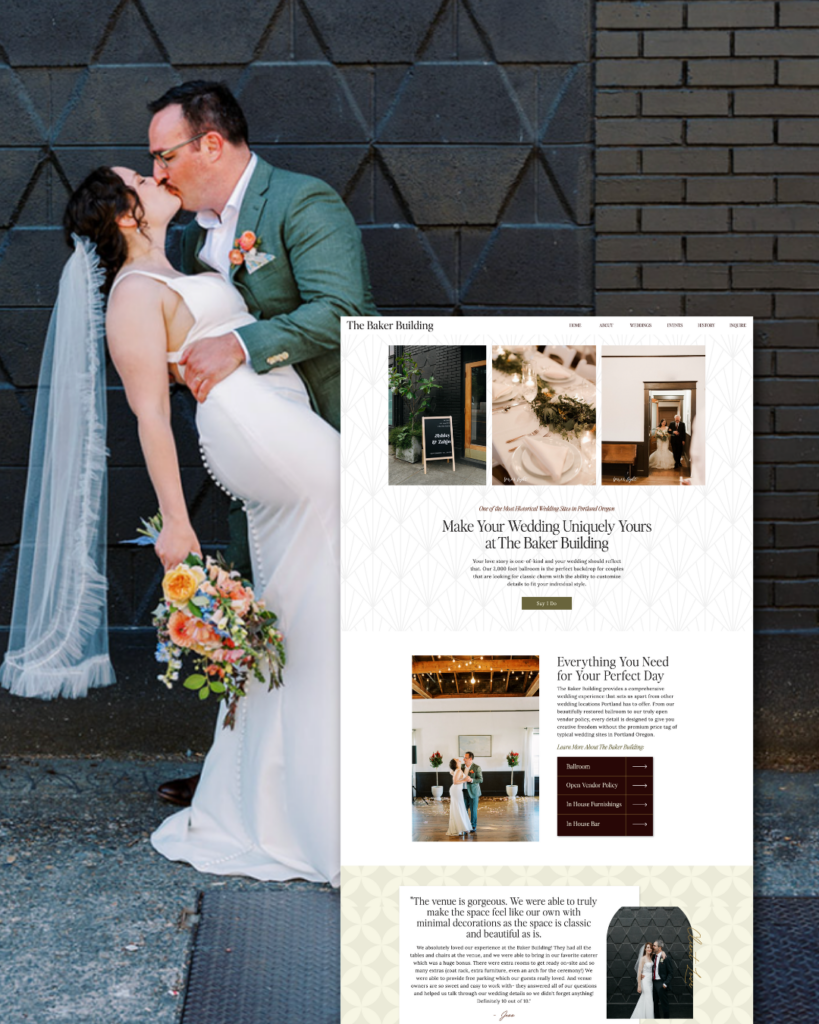
Instead of starting from zero with a custom website, a designer uses a template as a strategic starting point and customizes it to fit your business goals, brand identity, and client experience.
Why Showit Is Different From Other Website Platforms
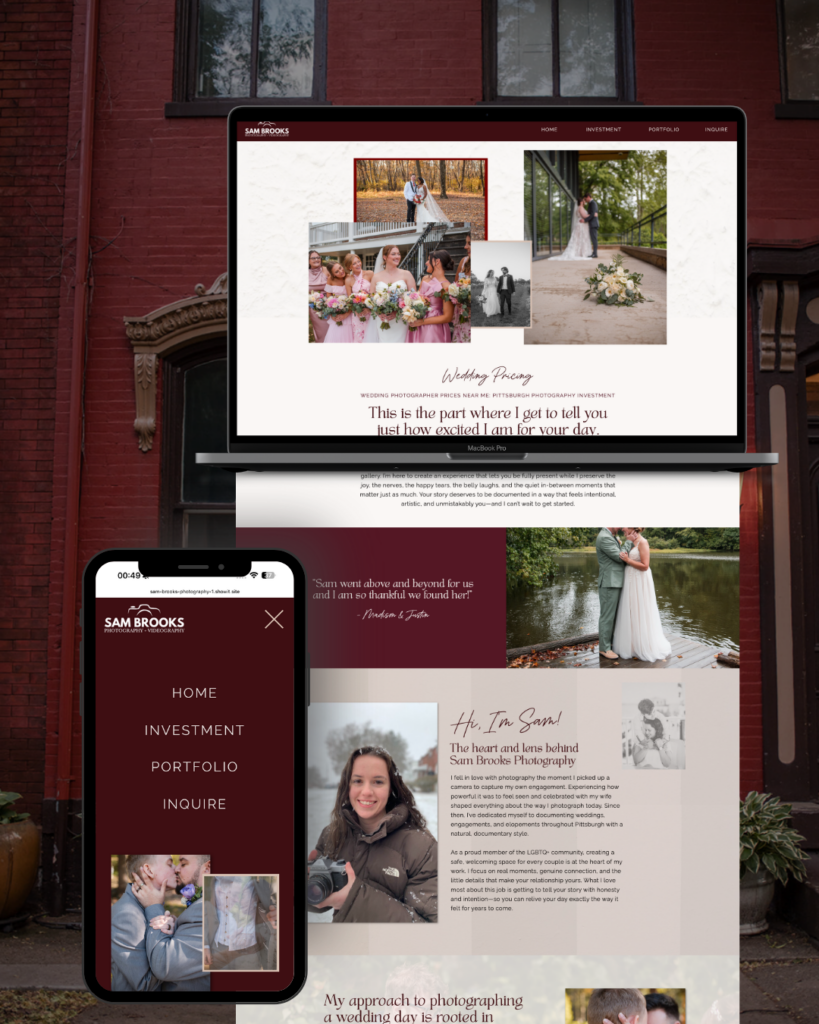
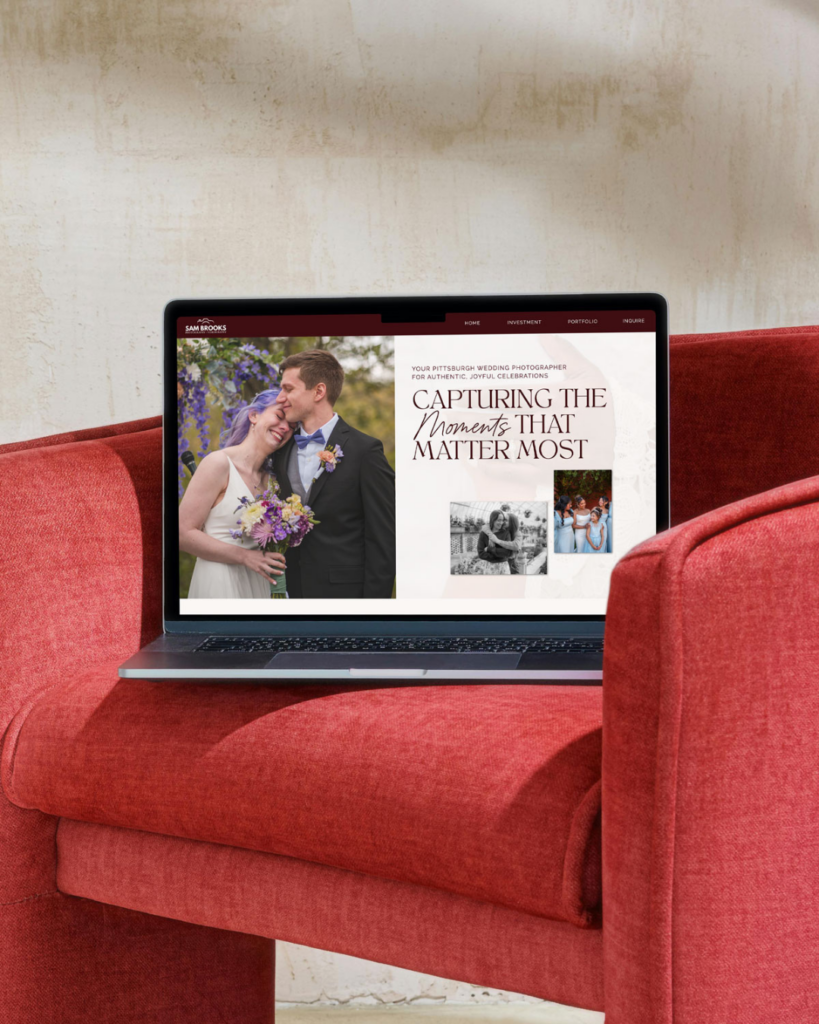
One of the reasons Showit has become so popular among wedding professionals is because it offers far more design flexibility than platforms like Squarespace or Wix without requiring extensive coding knowledge.
This flexibility matters because the wedding industry relies heavily on:
- Visual storytelling
- Emotional branding
- Portfolio presentation
- Personalized client experiences
And many business owners eventually outgrow the limitations of simpler drag-and-drop builders.
With Showit:
- Layouts are more flexible
- Mobile design is more customizable
- Branding can feel more immersive
- Creative direction is less restricted
This is also why many designers prefer Showit for luxury wedding brands and creative businesses.
It gives more room to create unique visual experiences while still allowing clients to maintain and update the website themselves later.
Why SEO Still Matters With Website Templates
One of the biggest myths surrounding templates is the idea that purchasing a “SEO-friendly” template automatically guarantees good search engine rankings.
Unfortunately, SEO does not work that way.
A template can absolutely be designed with SEO best practices in mind.
But SEO itself is never truly “plug-and-play.”
Strong SEO still requires:
- Keyword research
- Strategic copywriting
- Proper heading structures
- Meta descriptions
- Internal linking
- Mobile optimization
- Image optimization
- Intentional page strategy
And this is one of the biggest reasons business owners struggle after launching a DIY website.
The design may look beautiful.
But without strategic SEO implementation, the website may not actually perform well in search results.
This is also why working with:
- a designer
- an SEO strategist
- or both
can make such a significant difference in long-term website performance.
The Hidden Work Most People Do Not Talk About
Another important part of this conversation is the hidden work involved in website design.
Most people focus heavily on:
- colors
- fonts
- layouts
- galleries
But behind every polished website is a tremendous amount of backend strategy.
That includes:
- Link structures
- Mobile responsiveness
- SEO settings
- Technical setup
- User journey planning
- Navigation flow
- Accessibility considerations
And often, this is the part business owners underestimate when deciding to DIY a template.
The visual design may only be one layer of the process.
The strategic setup behind the scenes is what helps the website actually function effectively for your business.
Time vs Money in Website Design
One of the strongest themes throughout this episode is the idea of time versus money.
Every website decision ultimately becomes a tradeoff between:
- spending more money to save time
or - spending more time to save money
Neither option is inherently wrong.
The right choice depends entirely on:
- your business stage
- your workload
- your priorities
- your budget
- your goals
For newer businesses, templates often make sense because they create momentum without requiring a massive investment.
For more established businesses, investing in professional customization or custom design may create:
- faster implementation
- stronger positioning
- better SEO structure
- more elevated client experience
And sometimes, the biggest value is simply freeing up your own time to focus on the parts of business you actually enjoy.
What Makes a Custom Website Different?
While templates are incredibly flexible, there are still situations where a fully custom website makes more sense.
A custom website begins with strategy first.
Rather than starting with an existing layout, the entire website is built around:
- your business goals
- your client experience
- your positioning
- your offers
- your visual identity
Custom websites are especially valuable for businesses that:
- have highly unique offers
- need advanced functionality
- have a very distinct creative vision
- want stronger market differentiation
- are investing heavily into luxury positioning
In many cases, custom websites are also paired with custom branding because the entire visual and strategic ecosystem is being developed together.
This creates a much more cohesive brand experience across every touchpoint.
Why Branding Matters Before Website Design
One of the biggest mistakes business owners make is trying to build a high-end website before clarifying their brand identity.
A beautiful website cannot fully compensate for:
- unclear messaging
- inconsistent visuals
- lack of positioning
- weak brand strategy
Your website is ultimately an extension of your brand.
Which means before focusing on:
- layouts
- hover effects
- animations
- galleries
…it is important to understand:
- who you are trying to attract
- how you want your business to feel
- what makes your brand different
- what emotional experience you want clients to have
Without that clarity, even the most expensive website can still feel disconnected.
The Wedding Industry Has Different Website Needs
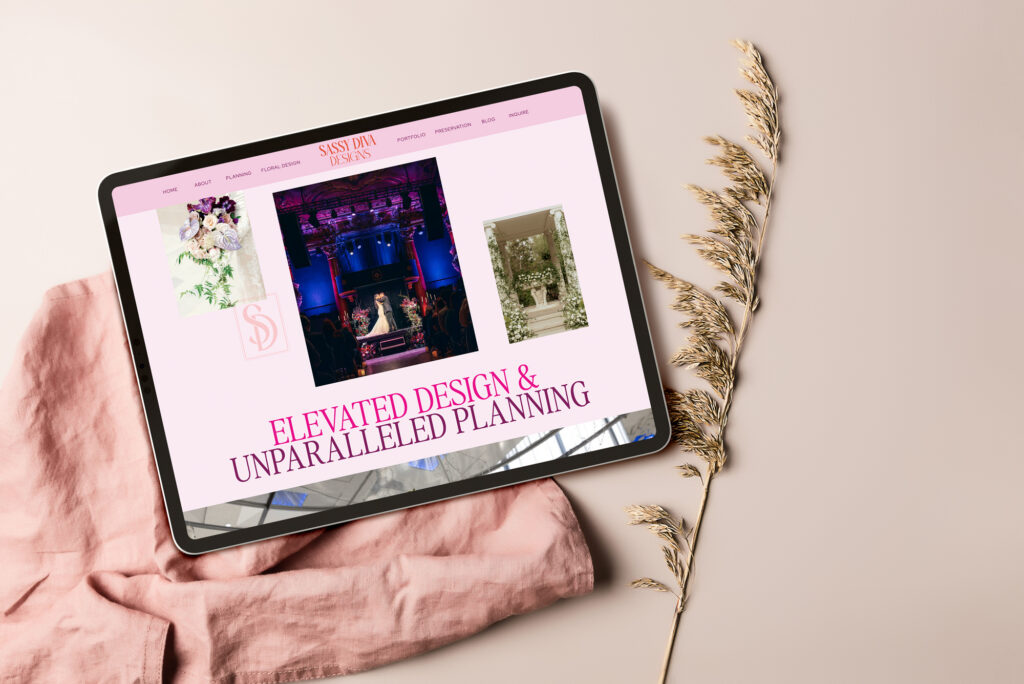
Wedding websites function differently from many other industries because weddings are highly emotional purchases.
Clients are not simply comparing:
- pricing
- packages
- availability
They are also comparing:
- emotional connection
- trust
- aesthetic alignment
- personality
- experience
This means wedding websites need to do more than provide information.
They need to create feeling.
And that emotional storytelling is one reason Showit has become such a strong platform within the wedding industry.
The flexibility allows businesses to create:
- immersive galleries
- layered brand experiences
- thoughtful storytelling
- elevated visual presentation
without sacrificing usability.
Templates Can Still Feel Custom
Another important takeaway from this episode is that templates do not automatically mean generic.
A thoughtfully customized template can absolutely feel:
- elevated
- strategic
- unique
- polished
- aligned with your brand
Especially when:
- the branding is strong
- the copywriting is intentional
- the imagery is cohesive
- the user experience is thoughtfully structured
In fact, many website visitors would never know whether a site began from a template or from a completely custom design process.
What matters most is how intentionally the website was customized and whether it creates a cohesive experience for the client.
The Real Goal Is Strategic Alignment
At the end of the day, the goal is not simply:
“Do I need a template or a custom website?”
The better question is:
“What solution best supports my business right now?”
Because your website should support:
- your current business stage
- your growth goals
- your client experience
- your marketing strategy
- your long-term visibility
And sometimes the smartest investment is not necessarily the biggest one.
It is the one that creates the most alignment between your business needs, your budget, and your goals.
Resources Mentioned in This Episode
Explore Emily Foster Creative:
Emily Foster Creative
Browse Showit Templates:
Emily Foster Creative Templates
Build a Website That Supports Your Growth
Whether you choose a template, template customization, or a fully custom website, your website should ultimately support the direction your business is heading.
A strategic website should:
- create clarity
- build trust
- improve visibility
- support inquiries
- strengthen your brand positioning
And most importantly, it should feel aligned with the experience you want clients to have from the very first interaction.
Because a website is never just about design.
It is about how your business is experienced online.



Be the first to comment